

Chris Moore was doing what many students do upon finishing their end-of-term exams — gathering with friends and indulging,Ìýperhaps overindulging, in drink and festivities.
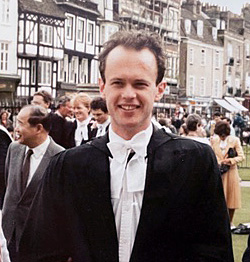 The 20-year-old undergrad at England's Cambridge University hadÌýjust wrapped up his second year of studies and went to a house party with three school chums in a community nearby.
Late into the evening and after many drinks, the group decided to jump in a car and head home. The vehicleÌýwasn'tÌýtheirs, but it was too far to walk back to theirÌýtownÌýand the keys were in the ignition. Moore remembers getting into the front passenger seat and promptly falling asleep, while his friend took the wheel.
He awoke on the side of the road, blood streaming down his face and police lights flashing around him. The car, he learned, had hit a group of student cyclists, killing one and injuring several others.
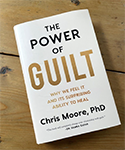
The horrifying incident, now 40 years on, is recounted in the introduction to a new book Dr. Moore has written about the emotion that weighedÌýhimÌýdown after the accident.Ìý explores what guilt means, why it matteres, and how the experiences that followed that terrible night helped redefined the meaning andÌývalueÌýofÌýguilt for him.Ìý
Just released by HarperCollins in Canada, the book — which was featured on Indigo's list of the most anticipated Canadian books of 2026 — will be celebrated with a launch event next Thursday (January 13) at the Social (former University Club).Ìý
A new understanding
Ìý
"What I tell in the story is how that experience framed up my understanding of guilt from a variety of different perspectives," says Dr. Moore, professor ofÌýPsychologyÌýandÌýNeuroscienceÌýat Dalhousie.
"I was offered forgiveness by the key people who were harmed by that event. My parents, my friends and the people who were harmed in the accident, all spontaneously offered forgiveness. And that led to the dissolution of the guilt that I felt."
Dr. Moore describes how the first thing his parents told him as he lay recovering from lacerations in the hospital was that he had "done an extraordinarily stupid and harmful thing," but that theyÌýneverthelessÌýstill loved him.
Even moreÌýsignificantÌýwasÌýtheÌývisitÌýfromÌýstudents, one of whom wasÌýin the groupÌýthat was hit, who offeredÌýforgiveness onÌýbehalf ofÌýtheÌývictimsÌýof the accident.ÌýThey were members ofÌýtheÌýChristianÌýUnionÌýand,Ìýas Christians,Ìýknew it wasÌýtheirÌýdutyÌýtoÌýforgive.ÌýDr.ÌýMoore still had to face theÌýconsequencesÌýofÌýhis legalÌýguiltÌýandÌýwas convicted ofÌýunlawfully takingÌýa vehicle.ÌýHeÌýspent three months in prison.
"What was so profound about that experience was that the enormous feelings of guilt that I had were in part dissipated by the forgiveness.ÌýWhat I came to understand is thatÌýat theÌýmost basicÌýlevel,ÌýguiltÌýis not about doing things that are wrong in a sense, butÌýit'sÌýabout the fear of harming the relationships that you care about. And that guilt is resolved through forgiveness by others. Guilt and forgiveness areÌýtheÌýtwoÌýsides to relationship management."
Breaking down guilt
Ìý
Dr. Moore,Ìýwho beganÌýwritingÌýthe book while taking in 2020, describes guilt is as aÌý"cocktail"Ìýof three main emotions: fear or anxiety over relationship damage; compassion for the other person; and self-directed anger over what you did.

He uses gossip to illustrate how guilt is tied to fears that a relationship may be harmed.
"If you gossip about a friend behind their back, then you probably are going to feel guilty — not because it's morally wrong, not because you've sinned, not because it's against the law, but because you feel like there is some possibility that you've now harmed a relationship that you care about," he says.Ìý"So that's the fundamental meaning of guilt."
Guilt as motiviation
Ìý
Therein lies the power and utility of guilt.
"It's to manage relationships. So,Ìýwhat guilt does in the end is it motivates you to work on restoring the health of the relationship that has been damaged by whatever you did. An apology is an important aspect of that reparation,"Ìýsays Dr. Moore, whose Catholic upbringing exposed him to the idea of guilt early on.Ìý
In the conclusion of his book — entitled Making Friends with Guilt — he argues that we need to shed the negative connotations around guilt and see it as a force for good that can inspire us to take care of our relationships.
"Yes, guilt is horrible, but like the best medicines of old, it is good for you. It helps us toÌýidentifyÌýwhen our relationships may be at risk and it guides us to work on them and to restore them," he writes. "So, let's welcome into our lives and make friends with it. Our relationships, and indeed our society, will be stronger for it."
 Book launch
Ìý
Join Dr. Moore and others for a book launch celebratingÌýThe Power of GuiltÌýon Tuesday, January 13 from 4-6 p.m. at The Social (University Club, lower level, entrance facing Wickwire Field).Ìý