

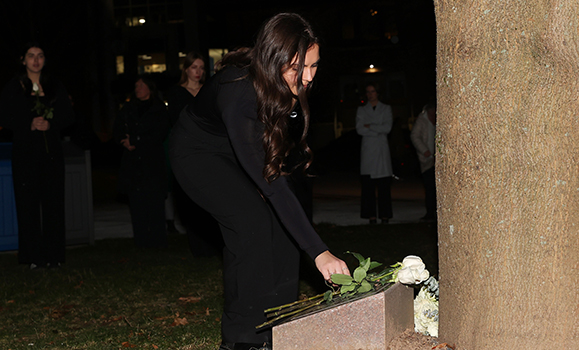
One by one, students, faculty, and staff step forward in silence, each placing a single rose beneath Dalhousie Engineering’s Tree of Remembrance. It’s a crisp, quiet evening over the university’s Sexton Campus, as members of the community gather to honour the 14 women who lost their lives in the École Polytechnique massacre on December 6, 1989.
“When I first learned about the École Polytechnique massacre, I understood it as a tragic event in history,” says Molly Richardson, this year’s co-president of Dalhousie’s Women in Engineering Society (WiE). Now, as a fourth-year Engineering student, she says December 6 has taken on a much deeper, more personal meaning for her.
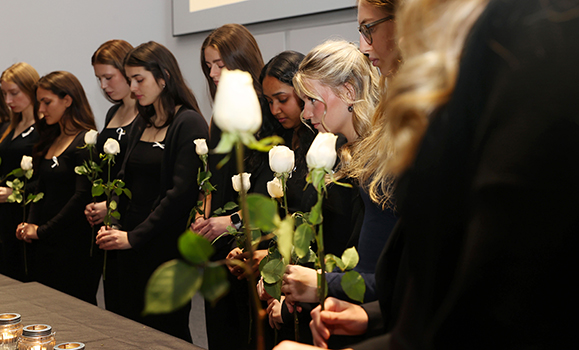
Each year, members of WiE lead the Remembrance and Resilience Ceremony, honouring the victims with roses, reading their names aloud, and creating a moment to reflect on the resilience of women in engineering. Similar ceremonies are held on engineering campuses across the country at 5 p.m. AST each December 6 to honour the victims of the École Polytechnique murders.
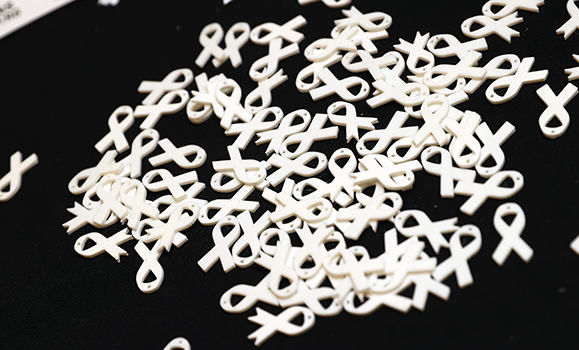
“December 6th serves as a serious reminder of the very real consequences of misogyny and gender bias, and of the work we must do to ensure engineering is a safe, inclusive space for everyone,” says Richardson. “Not only is it a day of remembrance, but it is also a call to action to honour the 14 women who lost their lives in this tragic event.”
A tragedy that still resonates today
On December 6, 1989, a gunman walked into École Polytechnique in Montreal, armed and intent on targeting women. He separated men from women in a classroom, singling out female engineering students, and opened fire. Fourteen women were killed that day, and another dozen people were injured.
In the wake of the tragedy, the day was designated the , observed across the country to honour the lives lost and reflect on the ongoing impact of gender-based violence. At Dalhousie, the day is also recgoznied as part of the 16 Days of Activism, a wider campaign focused on bringing an end to gender-based violence.
Learn more: 16 Days of Activism Against Gender-based Violence
Within the engineering community and beyond, December 6 has come to serve as a solemn reminder that the work toward equality and equity is never complete.
“Women in engineering continue to face challenges such as being underrepresented, gender bias and lack of mentors and role models,” says Richardson. “As a student, I see firsthand how the absence of women in faculty roles can impact confidence and belonging.
“The ceremony serves as a moment of reflection on the systemic issues that perpetuate gender inequality in engineering. It reminds us not only of the tragedy that occurred, but of our responsibility to continue advocating for safer, more inclusive, and more accessible spaces for women in engineering.”
Remembering the victims
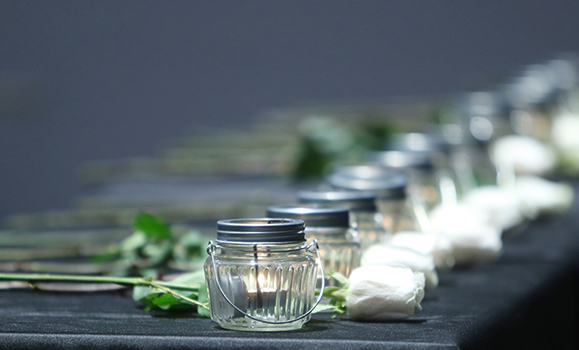
And so, each year, the community gathers in the Irving Oil Auditorium on Sexton Campus to remember. Twelve Dalhousie engineering students, one nursing student, and one administrative staff member take turns each blowing out a single candle. Each women represents one of the victims who lost their lives in the École Polytechnique massacre.
Participants also place a white rose beneath the Tree of Remembrance on Sexton Campus. It’s a quiet, powerful tribute to victims, whose legacy continue to inspire change and action within the engineering community.
While solemn, the ceremony also serves as a strong call to action.
“I want every woman in engineering to know that she has a place in this profession. No matter your background or lived experience, there is space for you here at Dalhousie Engineering,” says Richardson. “My hope is that this ceremony inspires students to support one another, to take risks, to push their boundaries, and truly own their spot in this program.”
Finding community and connection
Richardson first joined WiE to find her place on campus and to connect with more women in the engineering program. “What started as an extracurricular has now turned into my passion,” she says.
This year, she stepped into the role of co-president, alongside Emma Deveau, with the hope of expanding professional development and enrichment opportunities for women in engineering.
“With Engineers Canada's 30 by 30 initiative in mind, I hope WiE can be an asset to the recruitment and retention of women in the Dalhousie Engineering program and as they enter their professional careers.”

Molly Richardson (left) with her fellow Women in Engineering co-presiden Emma Deveau
She says it’s been one of the most enriching experiences of her university journey so far.
“Being a part of WiE has shaped the way I think about gender equity in engineering. It has shown me how welcoming, supportive and resilient women in the engineering community are,”
“Despite being underrepresented, there is a strong sense of connection and friendship, and I'm grateful to be part of it,” she adds. “And remembering the fourteen women whose lives were lost makes my work with WiE feel even more meaningful.”
On December 6th, we remember:
Geneviève Bergeron
Hélène Colgan
Nathalie Croteau
Barbara Daigneault
Anne-Marie Edward
Maud Haviernick
Maryse Laganière
Maryse Leclair
Anne-Marie Lemay
Sonia Pelletier
Michèle Richard
Annie St-Arneault
Annie Turcotte
Barbara Klucznik-Widajewicz